
Campus Sustainability News
News on campus sustainability initiatives, emerging programs, rankings, awards, student initiatives, green teams, and more from across the Cornell University campus.
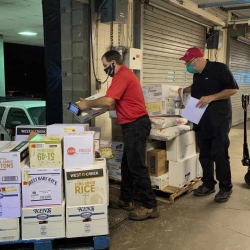
When three of the region's higher education institutions discovered they shared a sudden need to find a new primary food distributor, Cornell University, Ithaca College, and SUNY Cortland realized they had an opportunity to gain some efficiencies while continuing to influence collegiate dining trends. All three schools prepared requests for proposals to food distributors that could operate in Central New York, and all three were able to compare notes on the candidates.
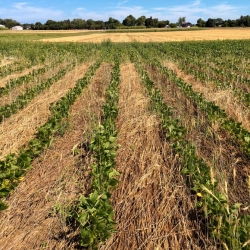
Organic field crop farmers in the Northeast and Upper Midwest are facing an increasing number of challenges related to more extreme weather events and pest and disease outbreaks. Now, a Cornell-led team of experts will support organic agriculture by developing more sustainable practices that balance the tradeoffs between productivity, environmental impact and growers’ quality of life. The project, “Taking Tillage Out Of Organic Grain Crop Production With Ecology, Tools, And Technology,” launched this fall, thanks to a four-year, $2 million grant from the USDA’s National Institute of Food and Agriculture, Organic Agriculture Research and Extension Initiative.
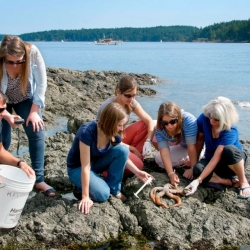
As it turns 10, Cornell Atkinson Center for Sustainability is celebrating its accomplishments while focusing with renewed urgency on creating more powerful ways to translate knowledge into action. The stakes have never been higher.

The University swept top spots in national sustainability rankings for the 2020 year after being recognized as one of the most sustainable higher education institutions by the Sierra Club, Princeton Review, AASHE's Sustainability Tracking, Assessment & Rating System, and the Carbon Commitment run by Second Nature.
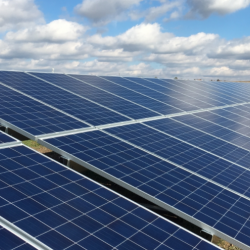
Max Zhang, a professor in the Sibley School of Mechanical and Aerospace Engineering, has been awarded a 2 ½-year, approximately $200,000 grant from the New York State Energy Research and Development Authority (NYSERDA) for work aimed at determining efficient solar farm array configurations to avoid land-use conflicts or spoiling precious agricultural space.
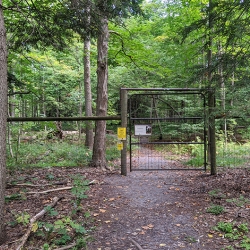
Cornell’s Sustainable Landscapes Trail now can be explored virtually, in a new narrated video tour from Cornell Botanic Gardens.
The 16 sites on the trail promote open spaces, natural areas and landscapes with unique sustainability features that enhance and promote healthy ecosystems. Most of these features were designed with staff, student, faculty and research collaboration.
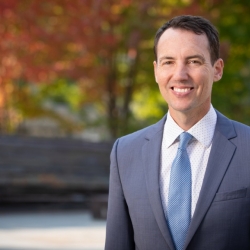
An accomplished environmental scientist, new CALS Dean Benjamin Z. Houlton has published more than 130 academic papers. He is internationally recognized for his research on ecosystem processes and for creating collaborations that drive sustainable agriculture and energy production.

A new research project – led by Rebecca J. Barthelmie, professor in the Sibley School of Mechanical and Aerospace Engineering, and Sara C. Pryor, professor of Earth and Atmospheric Sciences in the College of Agriculture and Life Sciences – is designed to unlock the power of wind energy by optimizing the spacing between wind turbines and wind turbine arrays to maximize power production.

If the cloth face covering can achieve levels of the FDA-approved face mask, the reusable cloth masks can replace the demand for disposable medical face masks for nonhealthcare professionals and provide accessible, affordable options to the public.
Cornell completed its 12th year of pursuing carbon neutrality and has published a greenhouse gas inventory showing carbon emissions have dropped by 36% from the 2008 baseline set as part of Cornell’s participation in the Second Nature Carbon Commitment. As detailed in the full greenhouse gas inventory, the Ithaca campus released 203,001 metric tons of carbon dioxide equivalent (MTCO2e) in 2019, compared to 318,624 MTCO2e 12 years prior.